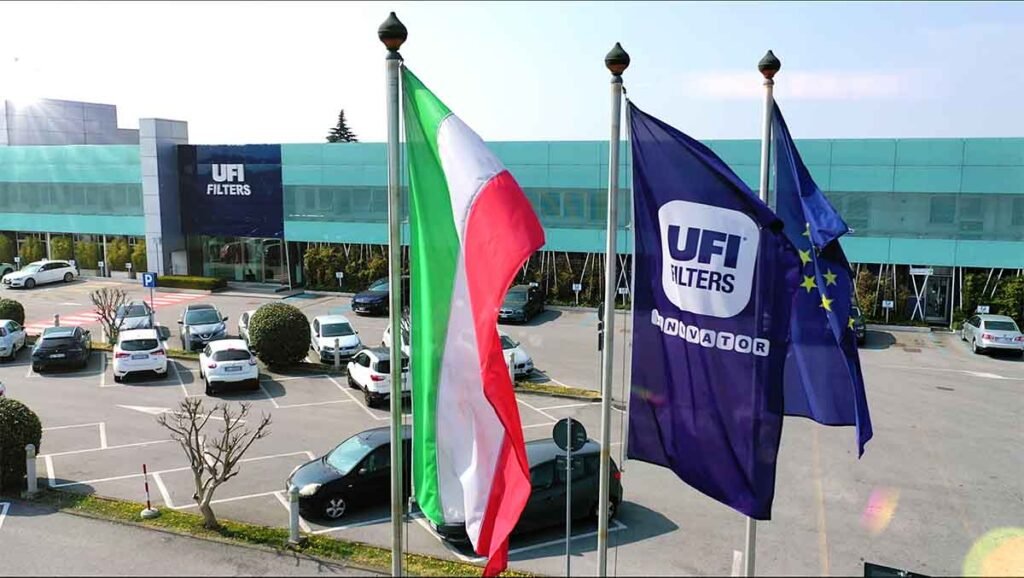
UFI Builds on Finland to Expand its Nordic Aftermarket Business
Finland is UFI’s largest Nordic market for light vehicles. With Swedish distribution developing and discussions under way in Norway and Denmark, Nordics Sales Manager Federico Zardini explains how product coverage, technical support and local partnerships fit into the company’s expansion plans.
Interview by Valentina Ahlavuo, Automediat.com
UFI entered the Nordic independent aftermarket through Finland and Sweden in 2023. Speaking to AUTOMEDIAT after Automechanika Frankfurt, Zardini describes a regional business that is still building its distribution and brand recognition.
“Finland is where we started building a consolidated position, and it is currently our largest Nordic market for light vehicles,” he says.
UFI’s main partner in Finland is Broman Group, one of the leading automotive aftermarket groups in the Nordic region, with operations in Finland, Sweden and Estonia. The partnership covers Broman Group’s Motonet and AD Varaosamaailma businesses. In Sweden, UFI works with Relais Group. Sweden is the next focus for expansion, with additional partnerships and greater brand awareness among the priorities. In Norway and Denmark, UFI is in discussions with potential distribution partners.
International purchasing networks support this approach. Through Broman Group’s AD Varaosamaailma business, UFI is represented within the AD International network, while Relais Group is connected to NEXUS Automotive International; UFI supplies both networks. In July, the manufacturer also joined GROUPAUTO International’s supplier portfolio, extending the distribution relationships supporting its UFI and SOFIMA brands.
Turning distribution into workshop sales
The product selection is tailored to the vehicles in each market. Air, oil, fuel and cabin filters form the core offering, with Volvo oil-filter applications among UFI’s current Nordic best sellers. Distributors help identify the most relevant applications and keep the selection of frequently ordered parts up to date.
UFI is not planning a separate Nordic-specific light-vehicle product launch at this stage. Its approach is to adapt the local assortment from its wider portfolio as demand develops, while also expanding into heavy-duty vehicles and off-road machinery.
Zardini links distribution growth with support for sales further down the supply chain. UFI provides catalogue assistance, TecDoc data, technical bulletins, training and joint customer activities. Installation instructions can also be provided for particularly complex operations.
“Our objective is not simply to increase sales into distribution; we want to help distributors grow their sell-out business,” he says.
Training covers product performance and the information customer-facing employees need when advising buyers. Zardini sees particular value in heavy-duty applications, where technical requirements and operating conditions can be demanding.
Transmission filters broaden the offer
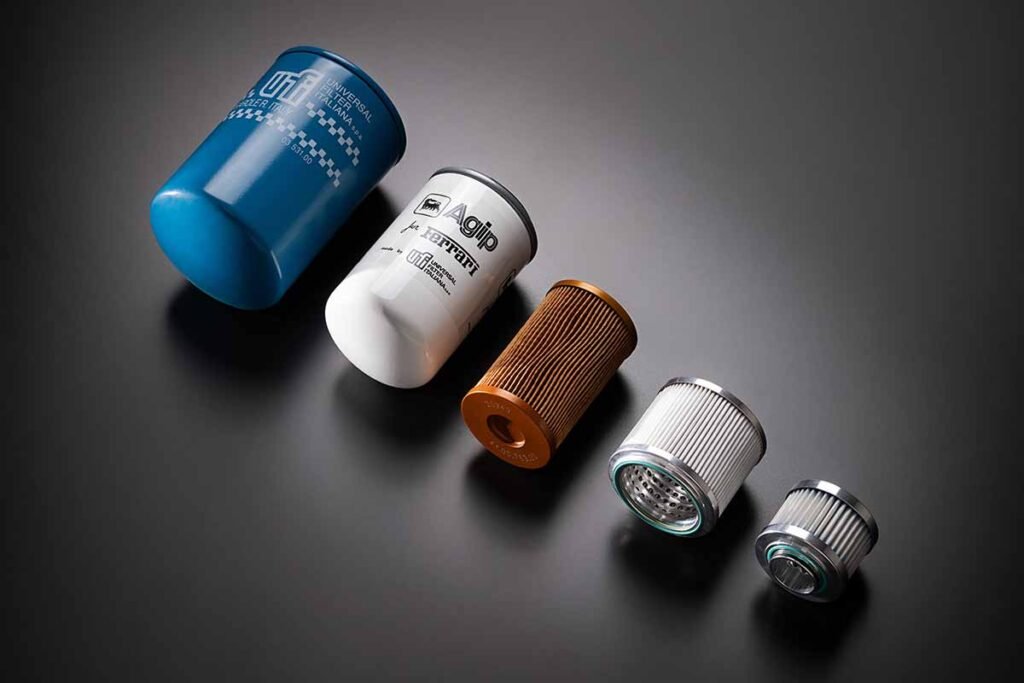
UFI’s main aftermarket launch at Automechanika Frankfurt was a range of automatic-transmission oil filters under the UFI and SOFIMA brands. Announced for availability from November 2026, the initial range comprises 48 part numbers.
According to UFI, these cover approximately 60 per cent of the European passenger-car fleet fitted with automatic transmissions: around 7,000 applications and nearly 60 million cars. The company’s target is to reach 90 per cent coverage of that fleet during 2027.
The range includes suction filters, pressure filters and maintenance kits, with kit contents determined by the original-equipment specifications. UFI says the range also addresses filtration requirements in electric and hybrid applications.
Separately, Zardini says the company is developing filter applications for Chinese vehicles entering Europe. The overall coverage will be released soon.
EV filtration is already part of the aftermarket range
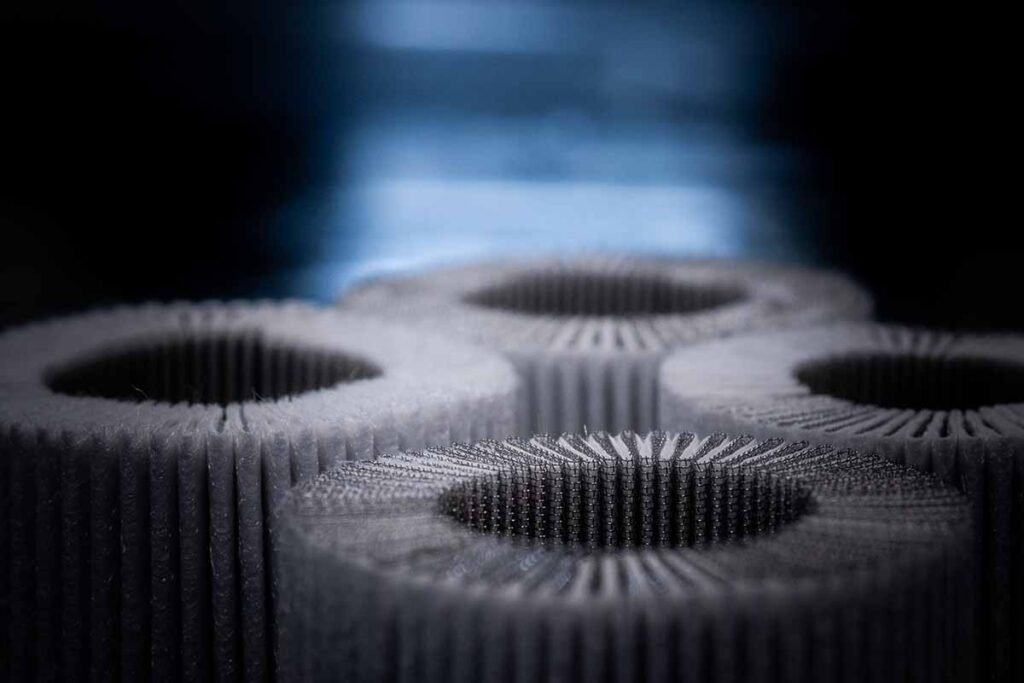
UFI’s independent aftermarket offering for electrified vehicles currently centres on filtration, with approximately 500 part numbers. Cabin filtration is one established application: UFI and SOFIMA offer HEPA and activated-carbon filters for the Tesla Model Y, as AUTOMEDIAT reported earlier this year.
Thermal management is currently an original-equipment business. UFI supplies technologies including transmission-oil heat exchangers, liquid-cooled condensers, coolant-flow valves, battery chillers, battery coolant heaters and heat exchangers for e-axles. Its CO2-based evaporator/chiller received the Automotive News PACE Pilot Innovation to Watch Award in 2025.
For distributors and workshops, the question is when these technologies will become available for independent servicing. UFI has not confirmed an aftermarket launch date for the thermal-management products. Zardini says there is no standard transfer period from OE to aftermarket: timing depends on the application, the number of vehicles in service, customer demand and relevant agreements or intellectual-property considerations.
“When a product becomes relevant to their needs, we assess the right time to introduce it into the aftermarket,” Zardini says.
The group’s development activities also include UFI Hydrogen, established in 2023. It develops and industrialises membrane electrode assemblies for water electrolysers used in green-hydrogen production and for fuel cells.
Formula 1 as a development environment
At Automechanika Frankfurt, UFI displayed the 1978 Ferrari 312 T3, the car associated with its Formula 1 supply debut. The display illustrated a long-running engineering relationship that Zardini sees as a way to explain UFI’s technical capabilities to Nordic customers.
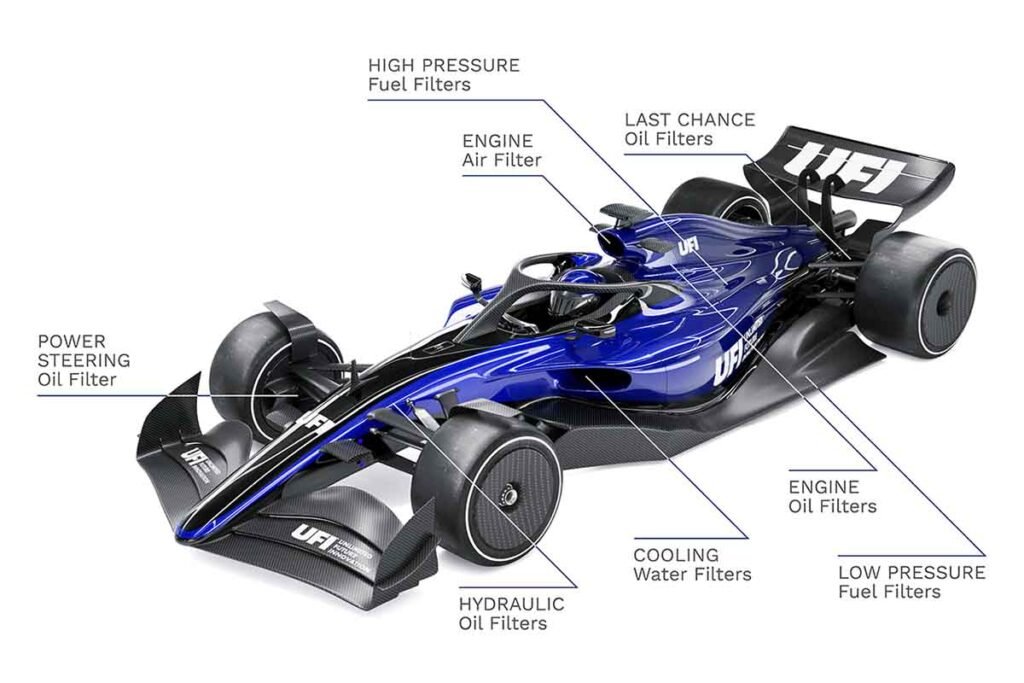
“Our Formula 1 experience gives us a strong point of differentiation,” he says. “We supply filtration solutions to 11 out of 11 Formula 1 teams, and the expertise we gain there also supports our original-equipment and aftermarket products.”
The racing filters are developed for individual teams and serve engine, cooling and hydraulic circuits. UFI also tests and analyses filters after use. The company describes the exchange of knowledge as a two-way process: production-vehicle development can inform racing solutions, while motorsport’s demands influence manufacturing processes and engineering skills.
Zardini says the motorsport connection attracts interest from distributors and wholesalers as well as mechanics and vehicle owners. For UFI, it provides a practical context for demonstrating filtration technology and reliability.
Reliability throughout the service interval
In heavy-duty and off-road applications, the commercial implications of reliability are direct. Mining machinery, for example, operates in demanding weather and temperature conditions, and an unplanned stop can interrupt production.
Zardini argues that the length of a service interval is only part of the specification. The filter must also deliver the required performance throughout that interval.
“Reliability is the key point. Service life alone does not tell the whole story: what matters is how the product performs throughout that period,” he says.