Schaeffler Merges the FAG, INA, and LuK Brands—Aiming for a Unified Aftermarket Portfolio
At the Automechanika Frankfurt trade show, Schaeffler announced that it would begin rebranding its aftermarket products in the second quarter of 2027. The FAG, INA, and LuK brands will be phased into the unified Schaeffler brand. At the same time, the company is developing a comprehensive offering for repair shops, in which spare parts, diagnostics, technical information, and training will support increasingly demanding repair work.
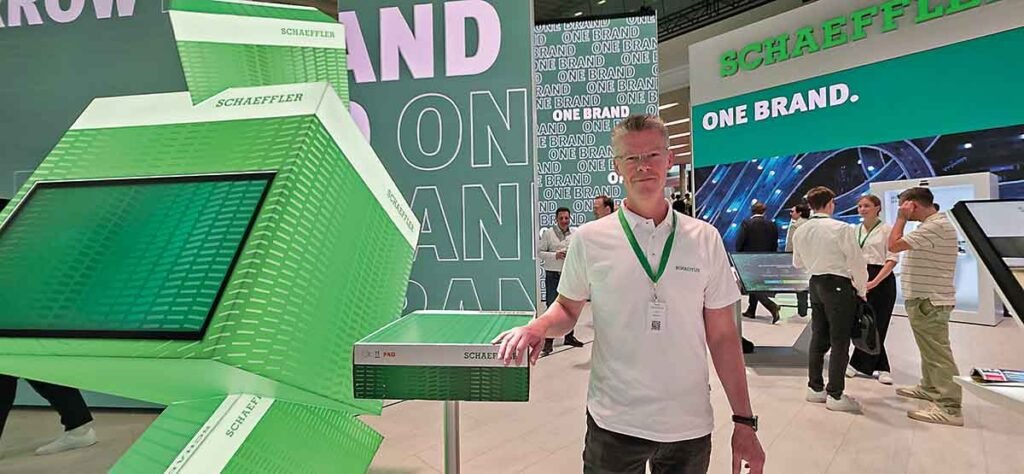
Schaeffler Vehicle Lifetime Solutions unveiled its new aftermarket brand identity at the Automechanika Frankfurt 2026 trade show. The goal of the rebranding is to unify the marketing of the company’s product and service portfolio and to make it easier for distributors and repair shops to access Schaeffler’s technical solutions.
The change will begin with the FAG brand in the second quarter of 2027, when a new packaging design will be introduced globally for its aftermarket products. The Schaeffler brand will feature more prominently on packaging, but the FAG, INA, and LuK names will remain as brand identifiers. The packaging for INA and LuK products will remain unchanged in 2027.
The change will not affect product quality, technical specifications, part numbers, contracts, day-to-day business processes, or online catalogs. The FAG, INA, and LuK brand names marked on metal components will also remain. The changes will initially affect packaging and will gradually extend to marketing, product nomenclature, and sales support materials.
From Spare Parts to Comprehensive Repair Solutions
The rebranding is driven by the increasing complexity of vehicle technology and its impact on the operations of independent repair shops. According to Schaeffler, in addition to replacement parts, there is a growing need for diagnostics, technical information, specialized tools, and training.
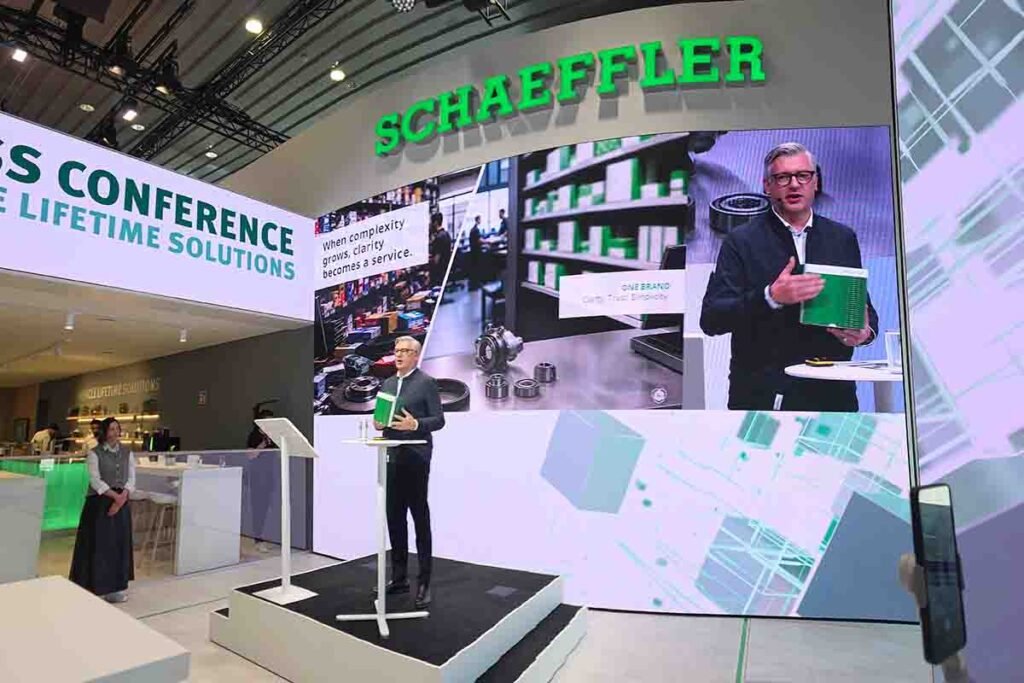
At a press conference held at Automechanika Frankfurt, Jens Schüler of Schaeffler Vehicle Lifetime Solutions emphasized that the company’s goal is to reduce the technical complexity faced by repair shops. The spare parts portfolio is complemented by diagnostic expertise, specialized tools, and REPXPERT training services.
Schaeffler’s repair solutions cover engines, transmissions, chassis systems, and thermal management, as well as electric vehicle technology, such as electric axle solutions and battery management systems.
According to Schüler, the goal is for repair shops to be able to perform technically demanding repairs in a cost-effective manner. In particular, the company aims to promote the repair of individual components as an alternative to the premature replacement of entire systems.
Electrification Expands Technical Requirements
Schaeffler continues to develop technology for both internal combustion engine and electric vehicles. With the acquisition of Vitesco, the Group has strengthened its expertise in electronics and electric vehicle technology. At the same time, it continues to develop traditional powertrain systems and aftermarket solutions.
Jens Schüler emphasizes the importance of taking regional vehicle fleets and repair shop needs into account. Schaeffler’s operating principle is to develop and manufacture solutions tailored to the needs of different market regions in Europe, the United States, and China.
According to him, the transformation of the automotive industry is causing uncertainty for suppliers, the aftermarket, and repair shops. In Europe, the business environment is also affected by high fuel prices and rising costs. However, Schüler assesses the situation in the aftermarket business as stable for this year and next.
He would measure the success of the repair industry’s transformation first and foremost by the extent to which independent repair shops are able to serve their customers even as new vehicle technologies become more widespread. “No repair shop should ever have to turn a customer away again. That would be a sign of success for me,” says Schüler.